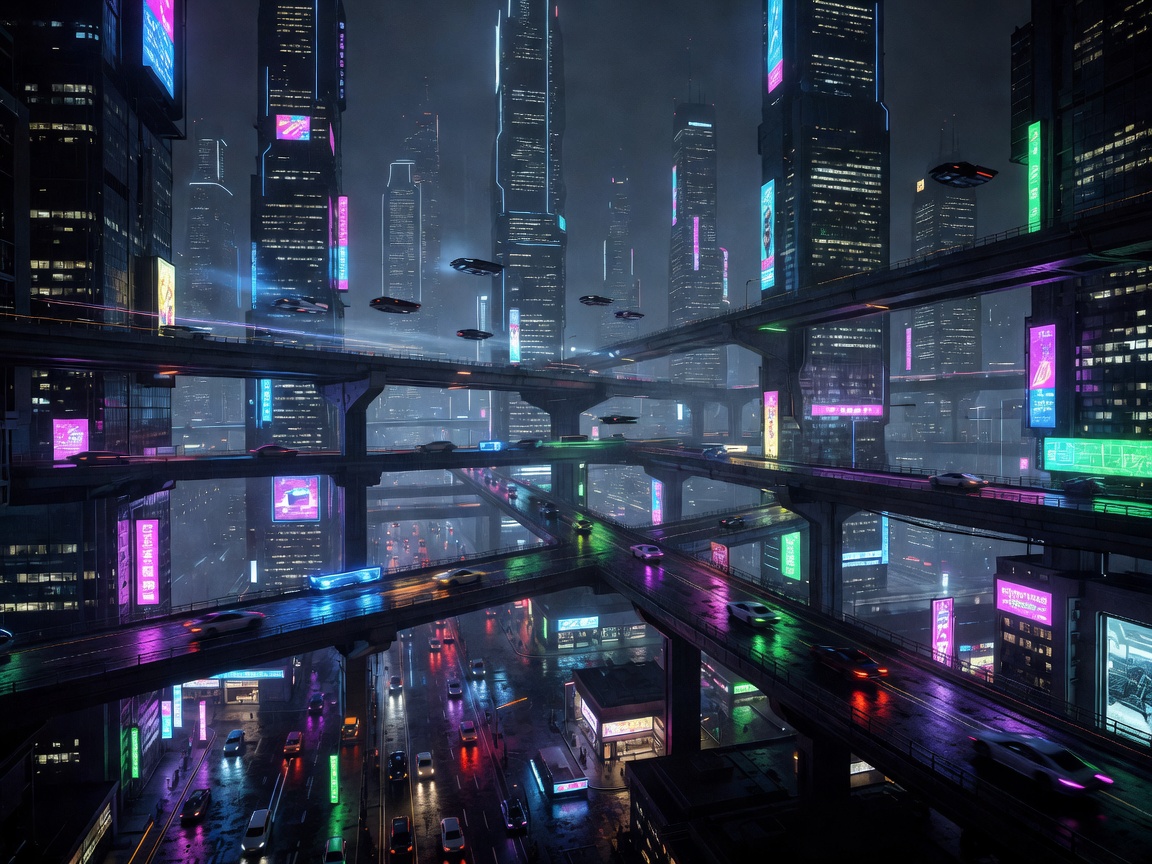
What makes a game cyberpunk?
A cyberpunk game usually places advanced technology beside concentrated inequality. The setting may contain artificial intelligence, corporate enclaves, body modification, pervasive networks or privately controlled security, but the important feature is the relationship between those tools and ordinary life. A brilliant interface does not create cyberpunk on its own; the genre asks who owns it, who is excluded, and what happens when a person tries to move through the gap.
Three useful comparisons
System Shock and the hostile network
System Shock makes artificial intelligence and corporate power part of the same problem. SHODAN is not just a villain with a face; the intelligence is embedded in the station's infrastructure, turning doors, surveillance and environmental hazards into expressions of control. The game therefore makes navigation itself political. You read terminals and spaces because information is both a weapon and a trap.
Deus Ex and layered agency
Deus Ex is interested in institutions: governments, corporations, conspiracies and the people caught between them. Its famous appeal comes from allowing different approaches to a problem. Stealth, conversation, exploration and direct force can reveal different consequences. That flexibility supports a key cyberpunk question: does increased personal capability produce freedom, or simply make the individual more useful to competing authorities?
Cyberpunk 2077 and the commodified self
Cyberpunk 2077 foregrounds a body and identity under pressure from ownership. Implants, recorded personalities and corporate contracts make the self feel technically editable and legally vulnerable. Its Night City is larger and more theatrical than the claustrophobic stations of earlier games, but the underlying concern remains familiar: technology expands possibility while institutions decide who may safely use it.
How to choose where to start
Choose by the question you want the game to emphasise. For artificial intelligence and atmosphere, look towards System Shock. For political factions and player-directed problem solving, Deus Ex is the clearer route. For spectacle, personal identity and a dense urban sandbox, Cyberpunk 2077 offers a different scale. None is a complete definition. Their differences matter because cyberpunk is a conversation, not a single ruleset.